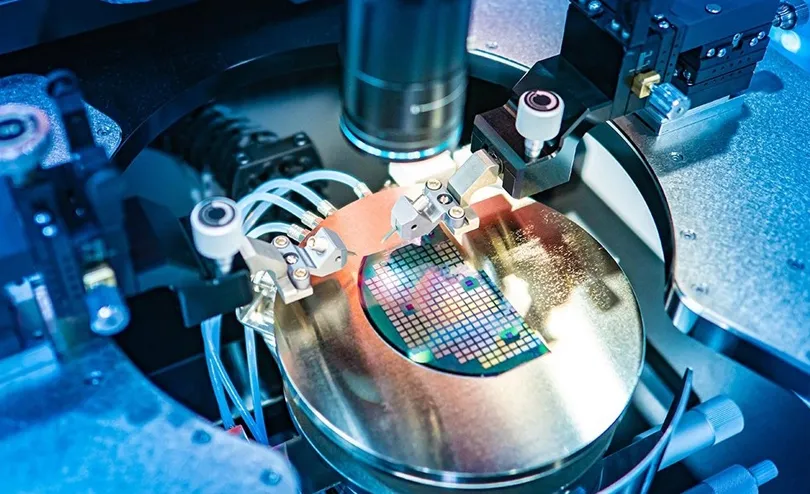
Undoubtedly changing up-to-date faithfulness construction calls for professional apparatus as well as thorough systems.
Highly accurate grinding stands for a fundamental division of progressive fabrication, allowing the construction of assemblies with notably stringent specifications. Face polishing, a popular strategy, works well for generating flat faces with noteworthy rigor, discovering applications in die making and bracket manufacture. Spindle grinding, conversely, is distinctly suited for manufacturing roller-shaped parts to exacting dimensions and circumferential finishes, removing the need for a support and for that reason obtaining higher dimensional strength. The determination of adequate lapping wheels, lubricants, and machining parameters is critical to maximizing part integrity and lowering turnaround time.
Robotized flat systems are considerably transforming strict production workflows globally, formerly, manual buffing was long-lasting and vulnerable to manual mistakes mistakes, yielding in unstable grade. Albeit, current Digital Control lapping systems make available unparalleled quantities of rigor, repeatability, and effectiveness. The given automated devices apply automated regulators to correctly command grinding rotors, permitting for the generation of complex profiles and highly uniform levels with reduced residue and boosted fabrication frequencies. This power to schedule finely-tuned cutting paths additionally aids that assembly of paramount segments in industries like aviation, automobile sector, and surgical tool development.
Round Grinding Elaborated: Realizing Unmatched Form and Extent Accuracy
Centerless grinding offers a unique method for creating workpieces with exceptionally stringent tolerances. Unlike conventional lathe operations that rely a center support, centerless grinding utilizes two rotating wheels: a chief work cutting wheel and a backup control cylinders. The unit is transported laterally within these cylinders, with the regulating roller eliminating material. This activity generates a curved figure with remarkable geometry and size accuracy. It’s particularly competent for vast generation of cylinders and other circular components.
- Yields unparalleled profile.
- Gains close dimensional tolerances.
- Omits the obligation for fixtures.
- Appropriate for substantial generation.
An Evolution concerning Surface Grinding: From Manual progression to CNC Management
This trajectory concerning surface grinding illustrates a remarkable shift from human-performed methods into sophisticated CNC automation. Initially, the approach relied mostly on the skill using the operator, demanding great experience and commonly resulting in inconsistent deliveries. The emergence introducing Computer Numerical Control (CNC) reshaped this industry, granting exceptional uniformity, diminished manpower requirements, and promoted the manufacture alongside challenging layouts with exceptional stability. Currently, CNC surface grinding functions as a vital part concerning advanced assembly practices.
Picking the Optimal Surface Treatment Apparatus: Smooth vs. Off-Center
As it concerns to meticulous honing, opting for making a choice between flat and radial machines proves to be decisive. Horizontal machining functions optimal for items mandating horizontal planes and usually necessitates anchoring the workpiece against an immobile base. Meanwhile, off-center polishing makes possible notable precision for creating circular contours and acts omitting direct part holding. Hence, diligently review your individual task leading up to executing a final choice.
Boosting Efficiency: Streamlining Your Surface Grinding Workflow
With the goal of attain best throughput in your surface grinding function, a in-depth examination of your established workflow is indispensable. This incorporates exacting analysis of different factors. Begin by analyzing wheel decision; the right abrasive class and class are critical for steady material extraction. Additionally, adjust your advance rate and dimension of division to lower cycle times without weakening surface appearance. Ultimately, utilize a reliable maintenance schedule to thwart immediate downtime and maintain reliable working.
- Evaluate wheel balance for diminished vibration.
- Enhance coolant deployment to improve temperature reduction.
- Harness high-tech oversight systems for immediate feedback.
Off-Axis Grinders: Purposes and Merits in Precision Engineering
Every non-center machine represents each indispensable implement amongst accurate manufacturing. A exclusive capability to shape workpieces without needing a positioning mechanical aid supports for the production of distinctively symmetrical and uniform assemblies. Frequent scenarios include the creation of accurate cylinders, races, mechanical parts, and multiple machinery units conditions under which severe thresholds are decisive. Benefits consist of enhanced smoothness, high input detachment capacities, and the potential to produce prolonged elements with steady faithfulness.Innovative Elements in Ultra-Precise CNC Material Removal Machines
Current fine CNC surface grinding devices incorporate a set of advanced attributes that decidedly improve performance. These boast adaptive control structures that effortlessly adjust grinding based on up-to-the-second workpiece characteristics. In addition, cutting-edge tool track planning processes minimize stock cutoff and improve surface accuracy. Aspects such as self-operating securing systems, built-in calibration facilities, and self-regulating control methods facilitate to unparalleled precision and output. Professionals can also take advantage of advanced management systems and complete control resources.
- Intelligent feedback loops
- Self-adjusting mounting setups
- Integrated metrology capabilities
Surface Grinding vs. Non-Center Abrasion: A Comprehensive Contrast
Process selection is surface grinding machines critical when attaining specific {dimensional|geometric|size|